-1.png)
In public procurement, value for money is no longer simply about choosing the lowest price. It is about securing the best overall outcome, and being able to demonstrate that every decision was competitive, compliant and aligned with public priorities.

The UK public sector spends more than £380 billion each year on public contracts, representing around a third of total public spending. As scrutiny increases, procurement leaders must show how public money is being governed, while delivering social value, supporting SMEs and meeting sustainability objectives.
The definition of value has changed
The Procurement Act 2023 came into force on 24 February 2025, replacing the Public Contracts Regulations 2015. One of its key changes is the move from the Most Economically Advantageous Tender to the Most Advantageous Tender.
This broader approach recognises that value is not determined by price alone. Quality, social, economic and environmental outcomes must also be considered. The change is already influencing procurement behaviour: in the first three months following implementation, the use of quality criteria in open-procedure lots increased from 48% to 72%.
For public bodies, the challenge is no longer just to select the right supplier. They must be able to evidence why the decision represents the best overall value.

Where public bodies face the greatest risk
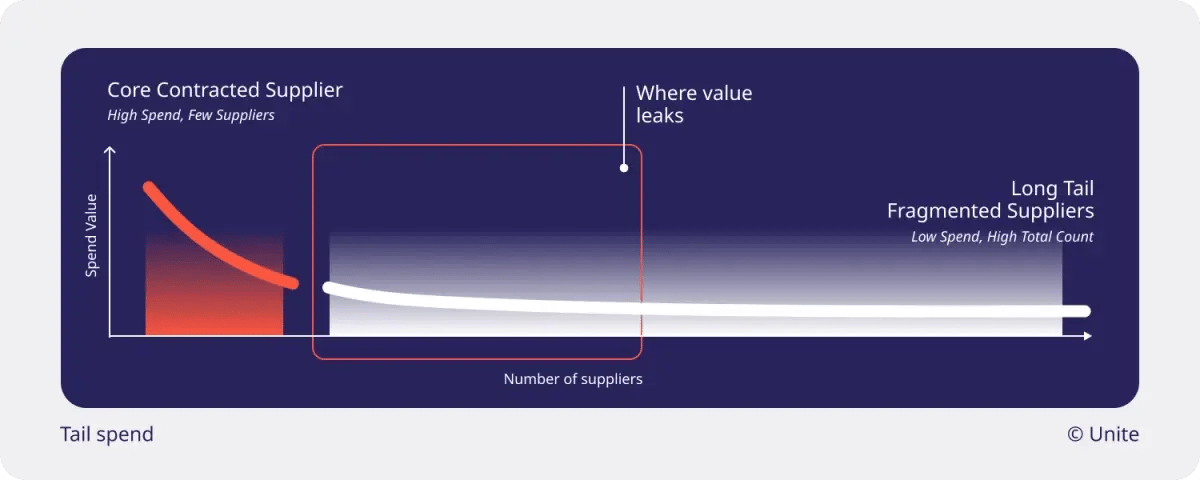
Indirect and tail spend remain major sources of inefficiency and audit exposure. Tail spend can account for up to 20% of total spend, while generating as much as 80% of transactional effort. It is often fragmented across many suppliers and departments, making it difficult to monitor.
When urgent purchases bypass approved processes, organisations lose visibility and may struggle to demonstrate compliance with Contract Procedure Rules. This creates both financial leakage and reputational risk.
A second challenge is SME participation. The UK government aims for one pound in every three of public procurement spend to reach SMEs. However, achieving and proving this target requires transaction-level visibility. Without reliable data on who an organisation is buying from, procurement teams cannot effectively direct spend or demonstrate progress.
Sustainability is also becoming a baseline requirement rather than an added benefit. NHS procurements in England already include a minimum 10% weighting for net zero and social value. From April 2026, the Evergreen Sustainable Supplier Assessment is expected to become mandatory for suppliers. This will increase the need for credible, detailed environmental evidence - including data at product and order level.
How leading procurement teams are responding
Leading public sector organisations are turning these challenges into a more consistent operating model.
They are bringing tail spend into governed, framework-backed purchasing channels, creating greater visibility and reducing off-contract buying. They are also building the audit trail directly into the purchasing process, so evidence is captured when each order is placed rather than reconstructed later.
SME participation is being treated as a measurable data discipline, not simply a policy ambition. By recording supplier information at transaction level, organisations can identify where spend is going and take informed action.
Finally, procurement leaders are demanding more detailed sustainability data and using compliant framework call-offs to access suitable suppliers without the cost and delay of running a new tender for every requirement.
Make every purchase more visible and defensible
Value for money under the Procurement Act 2023 means bringing together competitive pricing, quality, social value, sustainability and audit-ready compliance. These priorities do not need to compete with one another, but they do require better visibility and stronger governance.
Public bodies that are making progress are treating indirect and tail spend as a strategic opportunity rather than an administrative afterthought. The first step is visibility: organisations cannot prove, direct or defend spend they cannot see.
Ready to turn procurement challenges into measurable public value?
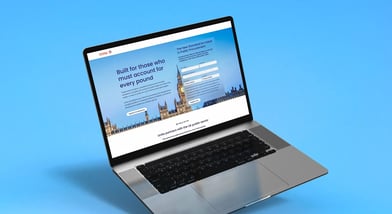
Explore Unite’s dedicated Public Procurement Hub for the latest thinking, practical insights and exclusive resources.
-1.png)
Unite
Unite is a public sector e-procurement platform. As a named supplier on the Government Commercial Agency (GCA) Tail Spend Solution Framework (RM6202), Unite offers all public sector organisations a free and compliant route to market in line with the Procurement Act 2023 (PA23). Through Unite, organisations gain access to an extensive, diverse and compliant network of pre-vetted suppliers, 82% of which are SMEs, and over 14 million listed articles. Unite is currently used by over 100 public sector organisations across the UK.