
-1.png)
Artificial intelligence is now a present-day necessity for UK public sector organisations, driven by constituent expectations and national policy. Yet, many government CIOs and technology leaders are finding that expanding AI investments does not always translate to measurable outcomes. According to Gartner’s 2026 CIO and Technology Executive Survey, nearly half of government respondents report expanding AI and automation, but only a quarter are seeing productivity gains¹. The challenge? Too many initiatives remain stuck in pilot mode, with siloed strategies and shallow skills.
Why AI Initiatives Stall
Treating AI as a tactical IT project leads to fragmented deployments and missed opportunities. Gartner’s research shows that organisations with robust data and analytics foundations and an agile AI strategy achieve significantly greater impact from AI adoption². Building an AI ecosystem means connecting AI-ready data, platforms, partners, and an AI-literate workforce—all managed with clear governance and strategic vision.
Contracting and Talent
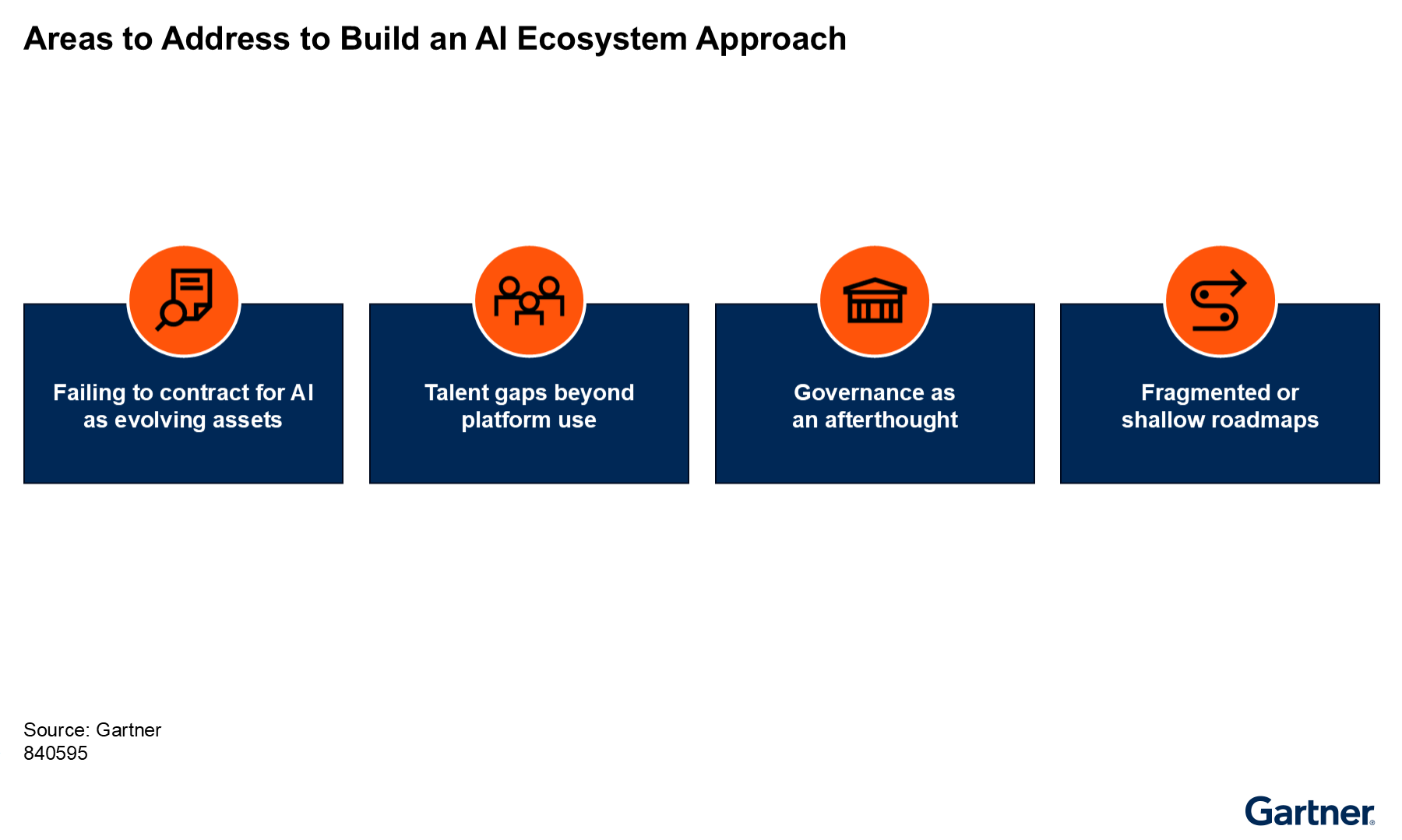
AI models and regulations are evolving rapidly, creating ongoing challenges for public sector organisations. This constant change means that traditional, static procurement approaches and basic SLAs can quickly become outdated, exposing organisations to technical drift and compliance risks. To keep pace, public sector leaders must ensure that their contracts—and the people who manage them—are flexible and future-ready. Investing in talent strategies that prioritise ongoing performance, retraining, and transparency is essential. By developing internal expertise, organisations can maintain effective oversight, adapt to new requirements, and build public trust.
Governance and Roadmaps
Effective governance must be embedded from the start, tailored to risk and mission impact, and supported by upskilled committees. To move beyond fragmented pilots, leaders should establish clear, multi-layered AI roadmaps, integrating data readiness, modern management, and workforce development.
The Role of the AI Centre of Excellence
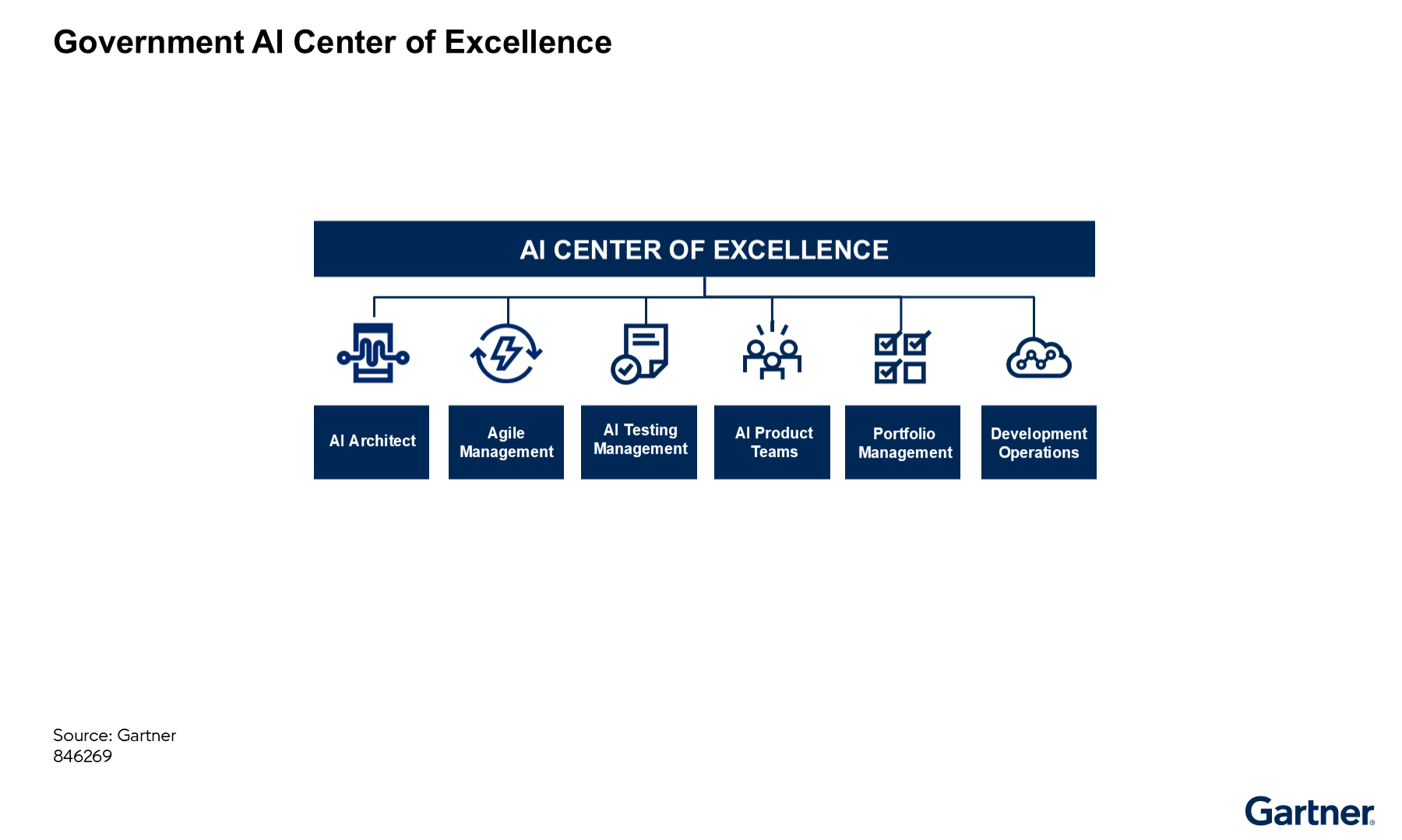
A government AI centre of excellence (COE) bridges strategy and scalable delivery. By empowering multidisciplinary teams with best practices and tools, a COE drives consistency, repeatability, and alignment with public sector missions.
Conclusion
AI is reshaping the public sector. Leaders who move beyond fragmented pilots and embrace an ecosystem-led strategy will deliver measurable impact, maintain public trust, and achieve mission outcomes.
Meet Gartner at DigiGov Expo
Gartner is the world authority on AI. Visit us at Stand D3, near the AI Theatre, to discover how our insights and frameworks can help your organisation unlock the value of AI at scale. You can also download our new eBook, “Unlocking AI Value for the Public Sector”, which shares practical steps and examples to help public sector leaders develop a secure, effective AI strategy.
.png?width=1585&height=397&name=Gartner-AI-authority-linkedin-profile-banner%20(3).png)
¹ 2026 Gartner CIO and Technology Executive Survey
² 2025 Gartner Transition to Digital Government Survey
How Government CIOs Can Accelerate AI Deployment With a Centre of Excellence
-1.png)
Gartner

.png?width=80&height=80&name=DigiGov%20300px%20Square%20(1).png)